 en
en 
 de
de it
it fr
fr es
es ru
ru jp
jp ro
ro








 Hungarian State Opera
 Thu 29 Oct 2026 - Sun 15 Nov 2026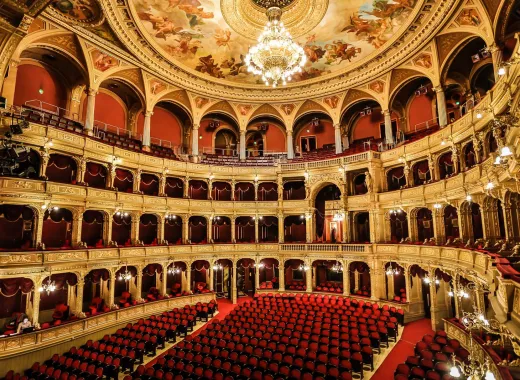
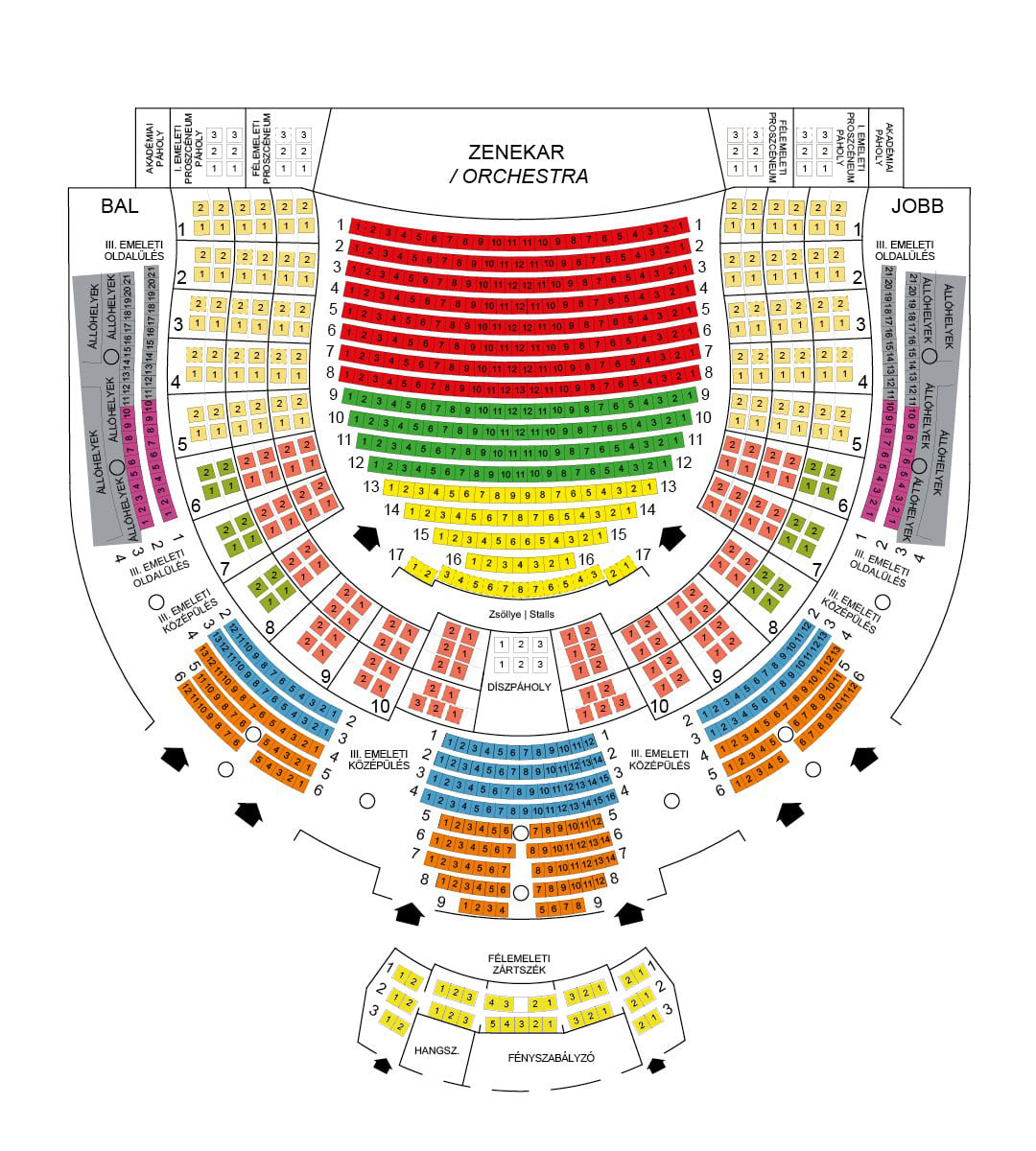
STANDING ROOM TICKETS - INFORMATION IN CASE OF A FULL HOUSE!
If all the seats are sold out for the selected time, but you still want to see the production on that day, 84 of the extremely affordable standing seats will be sold at the theatre, 2 hours before the start of the performance, with which you can visit the gallery on the 3rd floor. Tickets can be purchased at the ticket office of the Budapest Opera House. We would like to draw your attention to the fact that the stage can only be seen to a limited extent from the standing places and the side seats, but at the same time, following the performance is also supported by television broadcasting on the spot.
The Opera House is not only one of the most significant art relic of Budapest, but the symbol of the Hungarian operatic tradition of more than three hundred years as well. The long-awaited moment in Hungarian opera life arrived on September 27, 1884, when, in the presence of Franz Joseph I. the Opera House was opened amid great pomp and ceremony. The event, however, erupted into a small scandal - the curious crowd broke into the entrance hall and overran the security guards in order to catch a glimpse of the splendid Palace on Sugar út. Designed by Mikós Ybl, a major figure of 19th century Hungarian architecture, the construction lived up to the highest expectations. Ornamentation included paintings and sculptures by leading figures of Hungarian art of the time: Károly Lotz, Bertalan Székely, Mór Than and Alajos Stróbl. The great bronze chandelier from Mainz and the stage machinery moda by the Asphaleia company of Vienna were both considered as cutting-edge technology at that time.
Many important artists were guests here including Gustav Mahler, the composer who was director in Budapest from 1887 to 1891. He founded the international prestige of the institution, performing Wagner operas as well as Magcagni’ Cavalleria Rusticana. The Hungarian State Opera has always maintained high professional standards, inviting international stars like Renée Fleming, Cecilia Bartoli, Monserrat Caballé, Placido Domingo, Luciano Pavarotti, José Cura, Thomas Hampson and Juan Diego Flórez to perform on its stage. The Hungarian cast include outstanding and renowed artists like Éva Marton, Ilona Tokody, Andrea Rost, Dénes Gulyás, Attila Fekete and Gábor Bretz.



 RM EUROPA TICKET GmbH
 Call now
 Book now