
 EN
EN DE
DE IT
IT FR
FR ES
ES RU
RU JP
JP RO
RO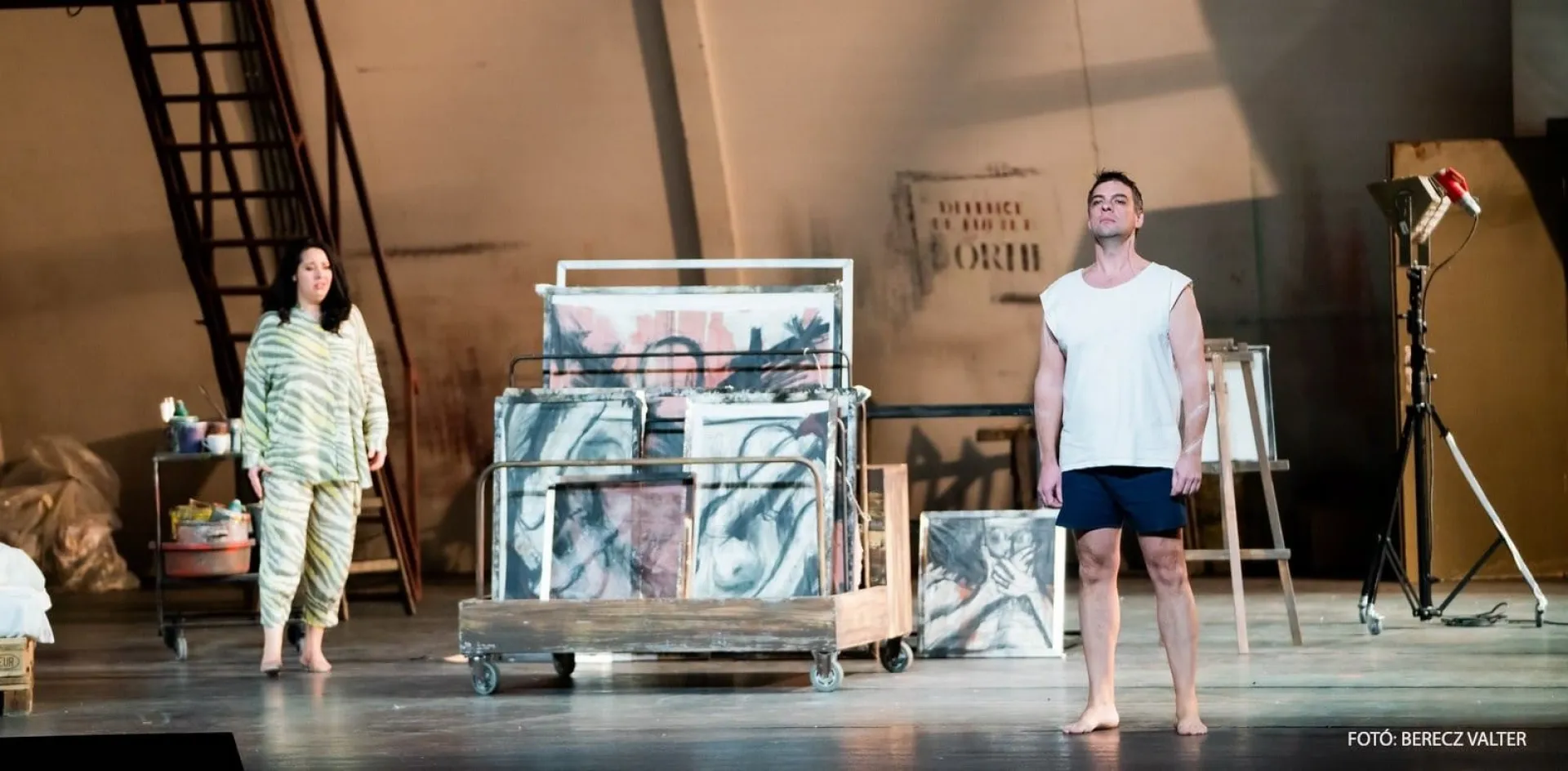
The Miraculous Mandarin, Bluebeard's Castle
Order tickets
January 2027  | ||||||
|---|---|---|---|---|---|---|
Mo | Tu | We | Th | Fr | Sa | Su |
Béla Bartók / Marianna Venekei
The Miraculous Mandarin (ballet in one act) / Bluebeard's Castle (one-act opera)
Running time: 2 hours including one intermission
Language: Hungarian
Surtitle: Hungarian, English
Bartók Béla’s two highly influential stage works explore the dynamics of the relationship between man and woman and the deeper layers of their personalities, as presented by creators who, through a fusion of tradition and innovation, reveal the possibilities inherent in these works for 21st-century audiences. In Venekei Marianna’s choreography of The Miraculous Mandarin, premiered in 2024, the inner world of the characters is examined through the language of dance, set within an evoked big-city milieu. In the production of Bluebeard’s Castle staged in 2018, marking the 100th anniversary of its world premiere, director Kasper Holten reveals the symbolic doors of the male psyche by evoking the former painters' studio of the Opera House.
Parental guidance: The performance is not recommended for children under 14 years of age.
Synopsis
The Miraculous Mandarin
In the hustle and bustle of the big city, everyone is in a hurry. In the midst of this rush, a four-member gang, three tramps and a girl rob and mug unsuspecting passers-by. There is only one strange figure who stands out from the crowd, his walk would fit into a slow-motion film, while his presence creates an unusual atmosphere – he is the mandarin. His gaze meets the girl’s, and from that moment on, he never lets her out of his sight, he follows her constantly, almost obsessively.
The gang follow their usual daily routine at their den, the members distribute the loot from their last robbery, and plan the details of their next crime. This is a small-style, peripheral clan with shady deals, in which the girl also an integral participant. Suddenly, the mandarin’s figure appears in the distance with an unstoppable approach towards girl unstoppably. An old gentleman appears, who owes the gang, and although reluctantly, he pays eventually. Then a young guy sneaks into the den, he wants to buy drugs.
Afterwards, the mandarin enters. The gang do not know him, they do not know what to do with him, the three tramps leave it to the girl to unravel the stranger’s plans. The man remains silent, the usual “interrogation” methods will not work on him, and the girl does everything to get him to speak. In vain. She asks, interrogates and teases him more and more violently. Finally, the mandarin shows his true colours. The girl fights desperately against the unrestrained, rampaging mandarin. However, the incredible energy and an unquestionable, bursting desire to care that emanates from the man convinces her. She sets off with him, but the three tramps do not want to let him go. They try to kill the mandarin by various means, and finally, they hang him. The girl is devastated, she holds the man in her arms for the last time, who is lying dead. Behind her catatonic solo, the scenery depicting the big city returns, and an invisible force pulls her back, while the last notes of the music absorb the broken figure of the girl.
Bluebeard's Castle
The protagonists of Béla Bartók and Béla Balázs’s symbolist opera are Bluebeard and his wife, Judith, who has left her family and her betrothed in order to follow her love. However, Bluebeard’s castle – that is, his soul – contains seven closed doors. Judith persuades her husband to open them, one after the other.
Behind the first door is the torture chamber, while the second leads to the armoury. Still unsatisfied, Judith wants to open the other doors in order to fill her beloved’s castle with light. Bluebeard gives her three more keys: the third is for the treasury, the fourth opens the door to the hidden garden. The treasure and the flowers, nevertheless, are bloody. At her husband’s bidding, Judith also opens the fifth door, where Bluebeard’s realm shines with brilliant light. The clouds, however, cast dark shadows.
Judith now wishes to look behind the “innermost” doors, but she asks Bluebeard in vain: she must not ask, but instead simply love him. Judith receives the sixth key, which opens the door to the lake of tears. From behind the final door emerge the three former wives. All goes dark.
Program and cast
The miracuolus Mandarin
Conductor: Péter Halász
The Mandarin: Iurii Kekalo, Mikalai Radziush
The girl: Lea Földi, Jessica Leon Carulla
Featuring the Hungarian National Ballet and the Hungarian State Opera Orchestra.
Choreographer: Marianna Venekei
Set designer: Gergely Zöldy Z
Costume designer: Szelei Mónika
Video designer: Zsombor Czeglédi
Assistant choreographer: Ágnes Sárközy-Holler
Company répétiteur: István Kohári, Ágnes Sárközy-Holler, Marianna Venekei
Composer: Béla Bartók
Librettist: Menyhért Lengyel
Bluebeard's Castle
Conductor: Péter Halász
Judith: Judit Kutasi
Bluebeard: Mikhail Petrenko
Featuring the Hungarian State Opera Orchestra
Director: Kasper Holten
Set designer: Steffen Aarfing
Lighting designer: Ulrik Gad
Dramaturg: Judit Kenesey
English translation by Péter Zollman
Composer: Béla Bartók
Librettist: Béla Balázs
Hungarian State Opera
STANDING ROOM TICKETS - INFORMATION IN CASE OF A FULL HOUSE!
If all the seats are sold out for the selected time, but you still want to see the production on that day, 84 of the extremely affordable standing seats will be sold at the theatre, 2 hours before the start of the performance, with which you can visit the gallery on the 3rd floor. Tickets can be purchased at the ticket office of the Budapest Opera House. We would like to draw your attention to the fact that the stage can only be seen to a limited extent from the standing places and the side seats, but at the same time, following the performance is also supported by television broadcasting on the spot.
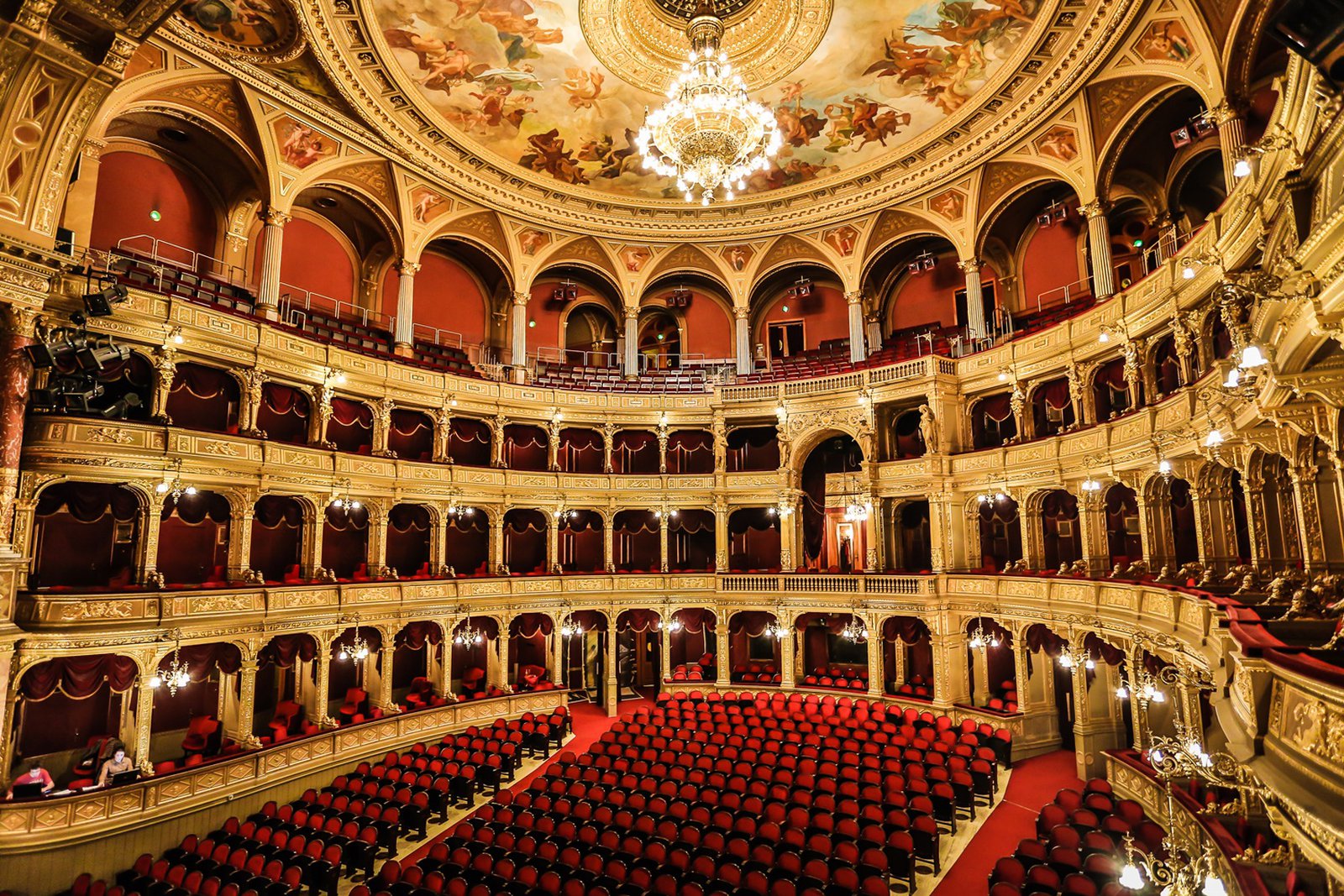
The Opera House is not only one of the most significant art relic of Budapest, but the symbol of the Hungarian operatic tradition of more than three hundred years as well. The long-awaited moment in Hungarian opera life arrived on September 27, 1884, when, in the presence of Franz Joseph I. the Opera House was opened amid great pomp and ceremony. The event, however, erupted into a small scandal - the curious crowd broke into the entrance hall and overran the security guards in order to catch a glimpse of the splendid Palace on Sugar út. Designed by Mikós Ybl, a major figure of 19th century Hungarian architecture, the construction lived up to the highest expectations. Ornamentation included paintings and sculptures by leading figures of Hungarian art of the time: Károly Lotz, Bertalan Székely, Mór Than and Alajos Stróbl. The great bronze chandelier from Mainz and the stage machinery moda by the Asphaleia company of Vienna were both considered as cutting-edge technology at that time.
Many important artists were guests here including Gustav Mahler, the composer who was director in Budapest from 1887 to 1891. He founded the international prestige of the institution, performing Wagner operas as well as Magcagni’ Cavalleria Rusticana. The Hungarian State Opera has always maintained high professional standards, inviting international stars like Renée Fleming, Cecilia Bartoli, Monserrat Caballé, Placido Domingo, Luciano Pavarotti, José Cura, Thomas Hampson and Juan Diego Flórez to perform on its stage. The Hungarian cast include outstanding and renowed artists like Éva Marton, Ilona Tokody, Andrea Rost, Dénes Gulyás, Attila Fekete and Gábor Bretz.
©

Related events